
If you just clicked over from my post about cockroach biology — welcome. This page is long. I'm going to walk you through everything I learned over 14 months.
Read it all. Skim it if you want. But please don't leave this page without understanding why what you've been doing isn't working — because I've talked to over 200 people now who are stuck in the exact same loop I was stuck in 14 months ago, and most of them don't know there's a way out.
If you found this page some other way and haven't read the original post, the quick context is this: My name is Mary Ann. I'm a regular person from Tampa who got obsessed with solving a roach problem in my condo after wasting most of $2,000 on chemical pest products that didn't work. I'm not affiliated with any pest control company. I'm not a vet. I'm not an entomologist. I'm just someone who got mad enough about being lied to that I spent over a year researching cockroach biology, the pest control industry, and what professional facilities use when they can't use chemicals.
This page is the result of that research.
The 8 Biological Facts That Explain Why You Haven't Been Able To Get Rid Of The Roaches
Let me start by stacking up everything we know about cockroach biology. Because once you see all of this in one place, you'll understand why no product you've ever bought has worked the way the box promised.
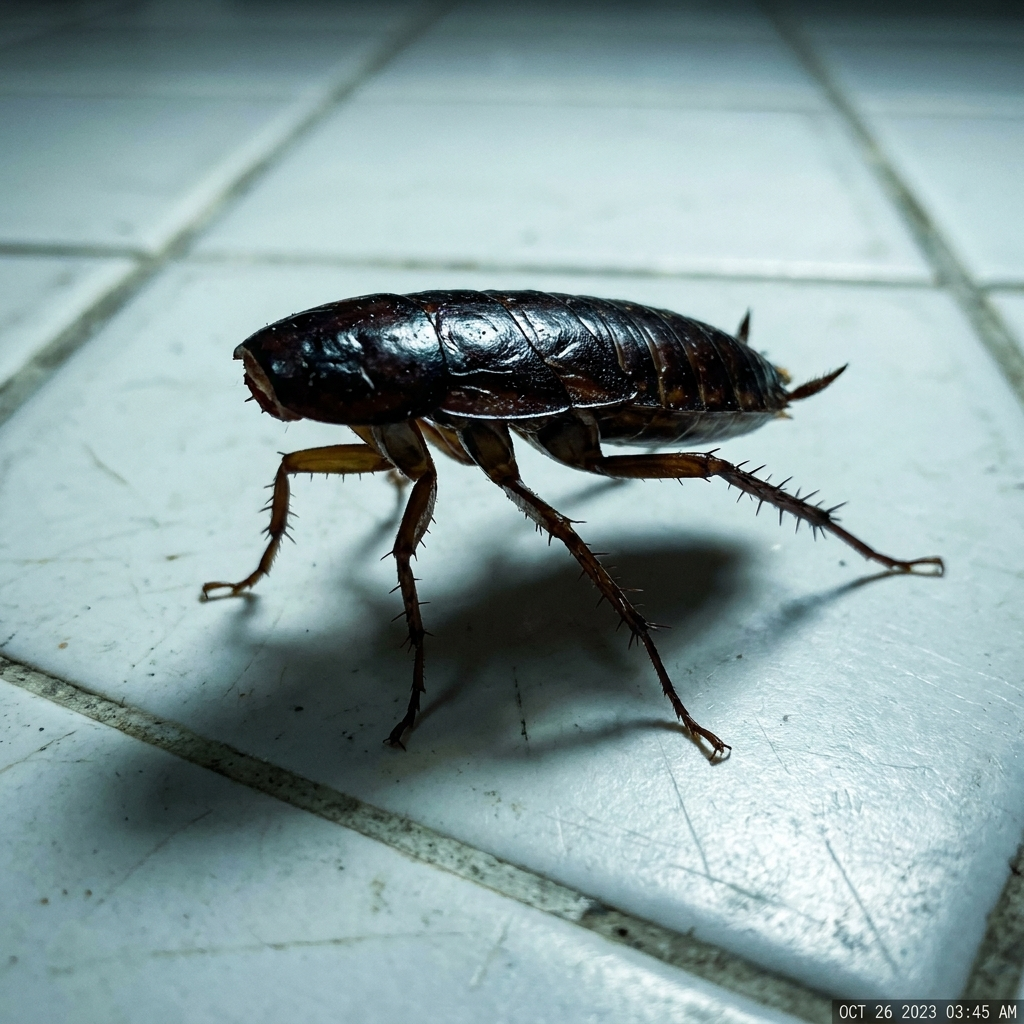
A cockroach can survive being decapitated for up to 2 weeks. Their nervous system is decentralized. The brain is not the control center — they have mini-brains called ganglia distributed throughout the body. This is why chemicals targeting the central nervous system (which is most insecticides) have limited and degrading effect.
A cockroach can survive being crushed by 900 times its own body weight. Their exoskeleton has a property called "anisotropic flexibility" — UC Berkeley filmed them flattening to a quarter of their normal height and bouncing back undamaged. The cells don't rupture under pressure. They also don't rupture under poison.

A cockroach can survive 10 times the radiation that would kill a human. Documented in nuclear research since 1957. Their DNA repair mechanism is on a different evolutionary scale than ours. The same biology that lets them survive radiation lets them survive chemical exposure that would kill almost any other insect.
A cockroach can hold its breath for 40 minutes underwater. That toilet flush you did last week didn't kill it. It probably climbed back up the pipes.
A cockroach's heart can stop completely, then restart on its own. A roach you swept up "dead" and threw in the trash may have woken up 6 hours later and walked back into your house.
A cockroach can survive at temperatures from 32°F to 115°F. No room in your house is too cold or too hot for them. They live in your freezer if they get in. They live in your attic in August. They live behind your stove where it's 110°F constantly.

A single female cockroach can produce up to 1.5 million descendants in a single year. One egg sac every 3-4 weeks, 30-40 babies per sac, sexual maturity in 6 weeks. The compounded math is real and published. The only thing keeping that number from being literal in your house is environmental constraint — not your Combat traps.
Now stack one more fact on top of those 7:

A cockroach can detect vibrations as small as 0.00002 of a meter. Their antennae have over 154 specialized sensors. They feel you walking into the kitchen from three rooms away. They feel your refrigerator door opening from 20 feet away. They feel the chemical residue of a Combat trap from 4-6 feet away — which is why they route around your traps instead of walking into them.
Now read that list again.
This is the animal you've been trying to kill with a $14 box of bait stations from Home Depot.
This is what your $30/month exterminator is being paid to "control."
This is the species that has been on Earth for 280 million years — longer than dinosaurs, longer than trees, longer than flowers — and it lives behind your refrigerator.
The Real Reason Chemical Pest Control Stopped Working Around 2008
I want to walk you through something that took me about 3 months of research to fully understand. Because once you see it, you'll never spend another dollar on chemical roach products again.
Here's how chemical resistance evolution works.
When a chemical like fipronil was first introduced to the market in 1996, it killed roughly 99% of the cockroach population exposed to it. The remaining 1% survived because of small genetic variations that made them slightly more resistant. Those survivors bred. Their offspring inherited the resistance gene. Some of those offspring had MORE resistance than the parent.
This is called "selection pressure." It's the same mechanism that produces antibiotic-resistant bacteria in hospitals.
For a German cockroach with a 6-week reproductive cycle, every generation is a new round of selection. The weak die. The strong breed. Within 6-8 generations — less than a year — the population develops 70-90% genetic immunity to the chemical.
Fipronil entered the consumer market in 1996. That was 30 years ago. Over 250 generations of cockroaches have been bred against it. The roaches in your kitchen today are not the same insect those products were designed to kill — they are the great-great-great-great-great-grandbabies of those original targets, and every generation in between has been selectively bred by the chemical itself to be more resistant.
The same is true for:
Chemicals Roaches Have Adapted To
- Hydramethylnon (Maxforce and some Combat products) — introduced 1980, even worse adaptation
- Indoxacarb (Advion) — introduced 2000, full adaptation in most urban populations by 2015
- Abamectin (some bait stations) — introduced late 1990s, full resistance documented in most major US cities
- Permethrin and pyrethroids (Raid, Hot Shot sprays) — introduced 1970s, resistance is so universal now that some entomology papers describe these products as "no longer functionally effective against German cockroach populations"
This is not a fringe theory. This is documented in peer-reviewed entomology journals. You can Google "fipronil resistance German cockroach" and find papers from Purdue University, the University of Kentucky, and Rutgers documenting it.
The pest control industry knows this. They just don't talk about it.
Because here's what would happen if they did: their entire business model would collapse. Combat sells $14 boxes of bait that they know don't work as well as the box implies. Hot Shot sells $9 foggers that haven't been effective against modern roach populations for over a decade. Monthly exterminator subscriptions are sold as a service when the truth is they're sold as ongoing rentals — because the chemicals can't permanently solve the problem they're sold to solve.
How I Finally Figured Out What Hospitals Use
About 9 months into my research, I got an idea I should have had on day one.
I asked myself: if chemical pest control has stopped working — and if the entire industry knows it has stopped working — then how do hospitals deal with cockroaches?
Because hospitals can't use chemical pest control. You can't spray pesticide where surgeries are performed. You can't fog a recovery ward. You can't poison the air where immunocompromised patients are breathing.
And yet hospitals don't have cockroach problems.
How?
I started cold-calling hospital facilities managers in Florida. Most of them wouldn't talk to me. But the third one — a 64-year-old facilities director at a regional hospital in Orlando named Tom — explained the entire industry shift to me in about 12 minutes on the phone.
He told me hospitals figured this out in the mid-90s. Food processing plants followed in the early 2000s. Pharmaceutical clean rooms got on board because they had FDA cross-contamination requirements that made chemicals impossible. Commercial boarding kennels switched because they couldn't poison 200 dogs at a time. By 2010, every major facility that handles food, animals, or medical care in this country had transitioned away from chemical pest control entirely.
The consumer market never got the memo. Because Combat, Raid, Hot Shot, and the residential pest control industry have a multi-billion-dollar reason not to talk about it.
Tom told me the technology these facilities use is called variable-frequency ultrasonic.
And he told me exactly why it works on roaches when nothing else does.
Why Variable-Frequency Ultrasonic Actually Works
Remember Fact #8 from earlier in this page? The one about cockroaches detecting vibrations at 0.00002 meters with their 154 antenna sensors?
That extreme sensory equipment is the reason cockroaches always know you're coming. It's the reason they route around your traps. It's the reason you never see them until you turn on the light.
It's also their biggest weakness.
The cockroach nervous system is wired to constantly process input from those 154 sensors. Sounds, vibrations, temperature shifts, chemical residue, air pressure. The roach is built to interpret all of that data in real time so it can navigate, find food, find water, find mates, and escape threats.
If you flood that sensory system with the WRONG kind of input — specifically, ultrasonic frequencies in the 22-65 kHz range — the cockroach can't process anything else. It can't navigate. It can't feed. It can't breed. It can't find harborage. The environment becomes intolerable, and within a few weeks the entire population leaves the area.
You don't have to kill them. You just have to make the environment unlivable to their sensory system.
Hospitals figured this out in the late 1990s. Here's the catch:
The $20 ultrasonic plug-ins you find at Walmart and on Amazon DO NOT WORK.
I want to be very clear about this because I almost gave up on the whole concept after trying one. The cheap consumer plug-ins use a FIXED frequency — they emit one tone, on repeat, forever. Roaches adapt to a fixed frequency in 14-21 days. After that, the device becomes background noise. The roaches ignore it. Every Amazon review that says "didn't work" is a review of a fixed-frequency device, and they're all telling the truth.
Commercial-grade systems work completely differently. They shift between dozens of frequencies across the 22-65 kHz range, hundreds of times per minute. The roach can't get used to a sound that won't stay the same. Its sensory system never gets to baseline. It can't adapt.
Hospitals pay between $8,000 and $12,000 to install commercial-grade variable-frequency systems in their facilities. Tom told me the system in his hospital has been running since 2003 and they haven't had to replace it.
After that phone call, I spent another 4 months looking for a consumer-grade variable-frequency system that actually used the real technology.
I found exactly one company doing it right.
What I Put In My House — And Why
The company is called CritterX.

It was started by an engineer who spent 15 years installing the $8,000-$12,000 commercial variable-frequency systems for hospitals, food plants, and boarding kennels. He decided to miniaturize the same engineering into a plug-in device for normal people. Same frequency range. Same shifting pattern. Same biological mechanism. Just at a consumer price point.
Here's what it actually is:
A small white plug-in device about the size of a household night light. You plug it into any standard outlet. It runs 24/7. There's nothing to refill, nothing to maintain, no chemicals, no bait, no plastic for pets to chew on, no residue on any surface in your house.
Specs That Matter:
What's Inside The Box
- 4 frequency modes: 22 kHz Low, 35 kHz Mid, 48 kHz High, 65 kHz Ultra
- Variable shifting pattern across all 4 ranges — roaches can't adapt
- 4-5 year lifespan per unit
- Effective on 40+ pest species including German roaches, American roaches, palmetto bugs, ants, spiders, silverfish, mice, bed bugs, mosquitoes, fleas
- One-time purchase: $89
- 90-day money-back guarantee
- 7,924+ verified customer reviews
I bought 3 of them. One for my kitchen, one for my basement, one for the main living area of my Tampa condo.
I plugged them in on a Tuesday.
By the following Monday — 6 days later — I saw my first significant drop in roach sightings. By 2 weeks I was down to occasional sightings in the basement only. By 30 days I had not seen a live cockroach anywhere in my house.
That was 9 months ago.
I have not seen a cockroach in my house since.
I have spent zero additional dollars on pest control in that 9 months.
For perspective: I had been paying $52/month for chemical pest control before I switched. That subscription was costing me $624 per year and roaches were still showing up in my kitchen every single night.
The math worked out to:
And the unit is rated for 4-5 years of continuous use.
Get The Same Variable-Frequency Tech Hospitals Have Used Since 1998
The $89 device that finally worked after 14 months of failed chemicals.
Order CritterX Direct →What The First 30 Days With CritterX Actually Look Like
I want to set realistic expectations because the marketing language on most pest products is dishonest about timelines. Here's what actually happens, based on my experience and the experience of the customers I've talked to:
A Few Honest Caveats:
What CritterX Cannot Do
- Whole-house coverage requires multiple units. One CritterX covers approximately 1,200 square feet. If you have a larger home or a basement, you'll need 2-3 units to fully cover your space.
- Works on present and incoming roaches. It does not work on roaches bricked into wall voids that can't physically leave. In severe cases, combine CritterX with a one-time deep-clean of harborage areas.
- It's not magic — it's a tool. If you have a structural issue — a hole in your foundation, a leaking pipe behind your wall, food sources you're not addressing — CritterX alone won't fix the conditions that attract roaches.
How CritterX Compares To Everything Else You've Tried
Let me lay out the math side-by-side. This is the table I wish I'd seen 14 months ago.
← Swipe to see full comparison →| Factor | $19 Plug-in | Combat | Hot Shot | Exterminator | CritterX |
|---|---|---|---|---|---|
| Upfront | $19 | $14–40 | $9–15 | $0 | $89 |
| Ongoing | $19–40/yr | $15–40/mo | $9–15/mo | $30–100/mo | $0 |
| Annual | $40–80 | $180–480 | $108–180 | $360–1,200 | $89 |
| 5-year | $200–400 | $900–2,400 | $540–900 | $1,800–6,000 | $89 |
| Frequency | Fixed | N/A | N/A | N/A | Variable |
| Modern roaches | No | Less | No | Less | Yes |
| Pet-safe | Yes | No | No | No | Yes |
| Plastic risk | Some | Yes | No | No | No |
| Breaks cycle | No | No | No | Partly | Yes |
| Long-term | No | No | No | Subscription | Yes |
A single CritterX costs less than 3 months of a typical exterminator subscription. It costs less than one full year of Combat traps. And it's the only option on the entire list that's specifically designed to work against modern cockroach populations that have evolved past the chemical era.
Why This Matters If You Have Pets Or Children
I want to take a moment on this because it's the part of my research that I didn't expect.
When I started looking into the chemical roach products I'd been using for years, I learned that the active ingredient in Combat traps — fipronil — is the EXACT same chemical that's in Frontline flea drops. The same chemical the pet pest industry has been putting on dog necks for decades is sitting inside the bait stations under your kitchen sink.
It's also a documented neurotoxin. The EPA classifies it as "Group C - possible human carcinogen." It causes tremors, drooling, vomiting, and in severe cases seizures in dogs. Cats are even more sensitive to it than dogs are because feline livers process the chemical more slowly.
I've talked to several pet parents over the last 9 months who've lost dogs and cats to these products. One reader sent me a story I haven't been able to stop thinking about — a 6-year-old golden retriever named Balto who chewed through the plastic housing of a Combat trap and died 4 days later from progressive neurological symptoms. The roach traps killed zero roaches. The only thing they killed was the dog.
I'm not telling you this to scare you. I'm telling you because the chemical roach industry has been built on a "low toxicity" claim that's a legal definition based on what kills a 150-pound human. It's not a safety guarantee for a 30-pound dog, a 10-pound cat, or a small child.
CritterX has none of these problems:
Why CritterX Is Different
- No chemicals anywhere in the device
- No bait for pets or children to find
- No plastic on the floor for a pet to chew
- No residue on any surface in your house
- Nothing to put in a child's mouth
- Safe around dogs, cats, birds, reptiles, and fish
The device plugs into the wall and emits sound waves that cockroaches can detect and humans, dogs, cats, birds, and reptiles cannot.
Ultrasonic devices CAN affect rodents — hamsters, gerbils, rats kept as pets, and rabbits to a lesser extent. If you have rodent pets, keep CritterX in a different part of your house from their cage, or talk to CritterX customer service before ordering. The 90-day guarantee means you can return it if your specific situation doesn't work.
For households with dogs, cats, birds, reptiles, fish, and children — CritterX is the only pest control option I've found that's truly zero-risk.
The Only Pest Control That's Truly Safe Around Your Family
No chemicals. No bait. No plastic. No risk to pets or children.
Get CritterX Now →Frequently Asked Questions
How To Order (And Why You Must Order Directly)
If you've read this far and you've decided to try CritterX, please order directly from the company:
Get The Real CritterX — Direct From The Manufacturer
The only way to guarantee you get the actual commercial-grade technology.
Order Now →I cannot stress this enough — do not order through Amazon, eBay, Walmart Marketplace, AliExpress, Temu, or any third-party reseller.
The Amazon problem is the worst of these. I spent 6 hours one Saturday afternoon comparing Amazon listings to the real CritterX website. I found 23 different listings using the CritterX brand name on Amazon, all selling for $40-50 less than the real product. I bought one to test it. When it arrived, I opened the case and found a $3 fixed-frequency circuit board — the same garbage that's inside every $19 plug-in on Walmart shelves — with a CritterX sticker on the outside.
I emailed CritterX directly and confirmed: they do not sell on Amazon. Every Amazon listing using their brand name is counterfeit. Amazon's policy on pest control devices is loose enough that counterfeiters can operate with very little oversight.
The only way to get the real product is at the link above, direct from the company.
One Last Thing
I started this page by saying I'm a regular person who got obsessed with this problem. That's still true. I don't work for CritterX. I don't get a commission. I'm not running ads for them. I made this page because I spent 14 months and almost $2,000 going through exactly what you're going through, and I wish someone had handed me the version of this page I'm handing you now.
If you have roaches, please try CritterX before you spend another dollar on Combat, Hot Shot, Raid, or a monthly exterminator. The 90-day guarantee means you have a no-risk window to test it. Worst case, you return it and you've lost nothing. Best case, you do what I did — solve the problem in 30 days and never spend money on this again for the next 4-5 years.
Either way, please don't keep doing what you've been doing. The chemical industry has been failing all of us for over a decade. You don't have to keep being one of their customers.
Stop Wasting Money On Chemicals That Don't Work
One $89 purchase. Zero subscriptions. Zero chemicals. Zero risk to your pets and kids.
Get CritterX Today →A regular person who got tired of being lied to.